Styles / A history of signs

We don’t just make signs. We love them.

Chalk on slate. Bulbs round a cinema door. Neon humming in a bar window. A departures board clattering through its letters. We grew up with these signs, and we’ve spent a long time bringing each one back properly, on any TV.

Bulbs 1900s
Neon 1910
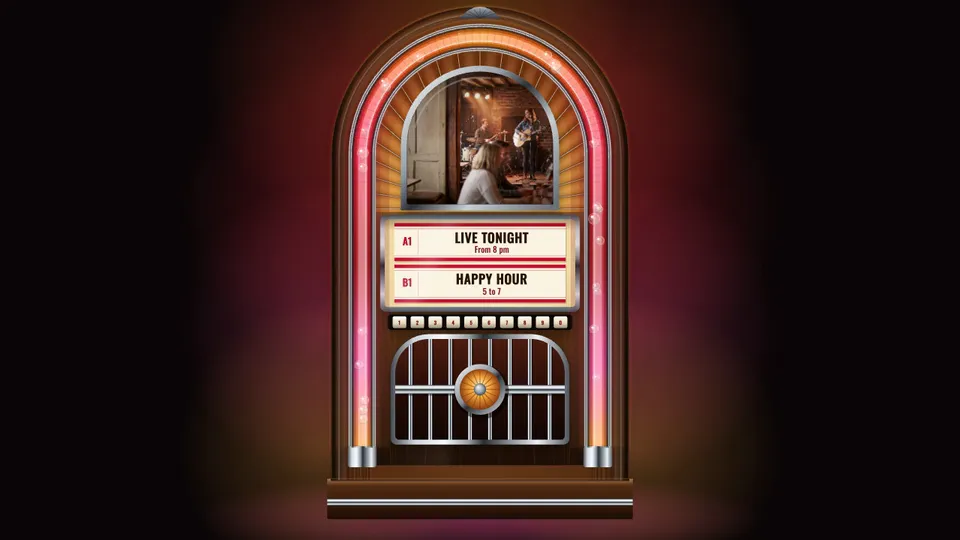
Jukebox 1946
Split-flap 1950s
Vanes 1960s
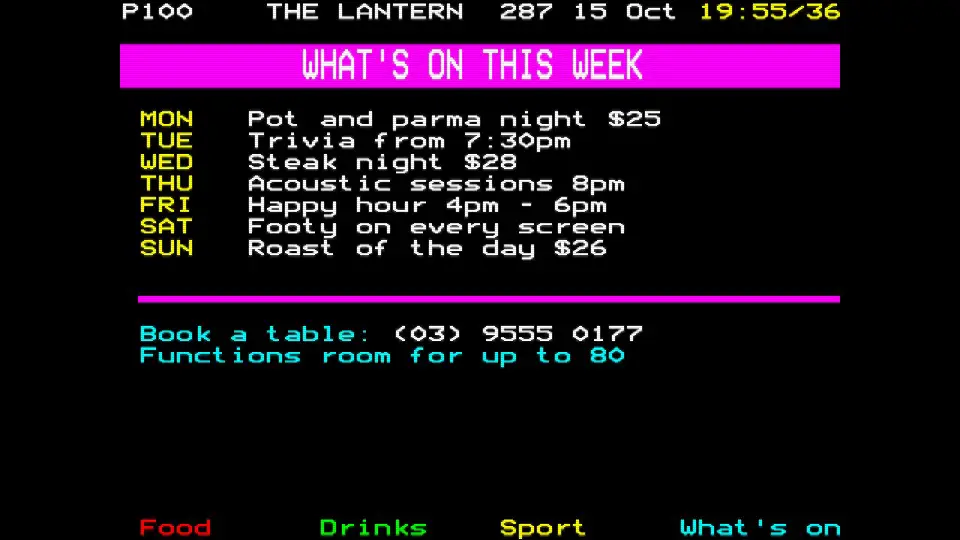
Teletext 1974
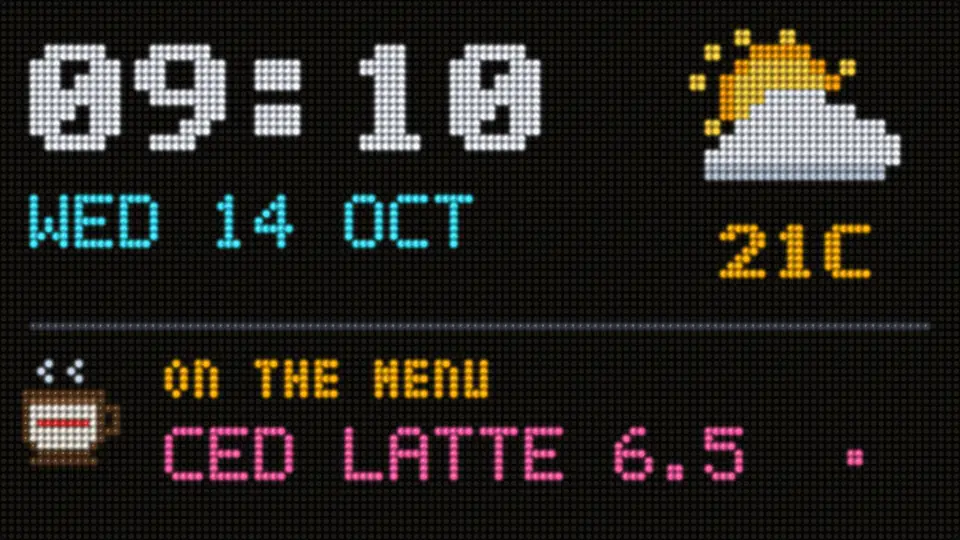
LED 1980s
Glass 2000s

Every sign on this page is drawn live by Dislab, as your TV draws it. None of them is a video.

Why we care

A sign is a feeling.

Most people will tell you a sign is there to say something. Open. Two for one. Platform 4. That’s true, and it’s the smallest part of it.

Think of the board at an old railway station rattling over to a new destination, and the whole hall looking up at once. The pink neon in a milk bar window on a wet night. The bulbs round a theatre sign, chasing each other, telling you tonight is something. Nobody remembers what those signs said. Everyone remembers how they felt.

A sign tells people what you sell. The right one tells them what kind of place they’ve walked into.

Signs are older than most of us can read. Roman shops painted their trade on the wall outside. Innkeepers in the middle ages hung a picture over the door, a bell, a swan, a crown, because most of the people walking past couldn’t read a word. Ever since, each new kind of light and each new machine has given us a new kind of sign.

We make digital signage for every business, big or small, and we could have made it the way most of it is made: words on a flat colour, a photo, a slide that fades into the next one. We do that too, and we do it well. But we kept coming back to the signs that made us stop and look, so we went back through the history of signs and rebuilt the best of them, one at a time, until they felt right.

Here’s the story of each one, from chalk to today, and how it lives on in Dislab.

The timeline

Two hundred years of signs that made people look up.

Every sign here is a Dislab template, drawn live on this page by the same software your TV runs. Start from any of them and make it yours.

1800s

Today’s specials

Chalk and paint

Before electricity, a sign was made by hand. Sign writers painted shopfronts and windows in enamel and gold leaf, and cafés, pubs and grocers wrote the day’s specials on slate in chalk. A chalkboard said something no printed sign could: somebody here wrote this today.

It’s still the most trusted look on a café counter, which is why we start there.

In Dislab

Chalkboard menus in hand-written faces, chalk and whiteboard scoreboards for the club rooms, and over 1,700 free fonts with scripts and brush lettering among them.

Start from a chalkboard menu

Pool comp · Good morning menu · lunchtime soccer · club honour board
1900s

Tonight

Bulbs and marquees

When electric light arrived, theatres wrapped their entrances in it. Rows of bare bulbs ran round the marquee and chased each other in a loop, and whole streets of them earned Broadway its nickname, the Great White Way. A wall of bulbs meant one thing: something is happening here tonight.

In Dislab

A picture-palace poster case ringed with bulbs that warm up and chase, marquee bulbs round any sign, and scoreboards made of bulbs.

See the cinema poster case

Now showing · the marquee · behind glass · a bulb scoreboard

1910

Open late

Neon

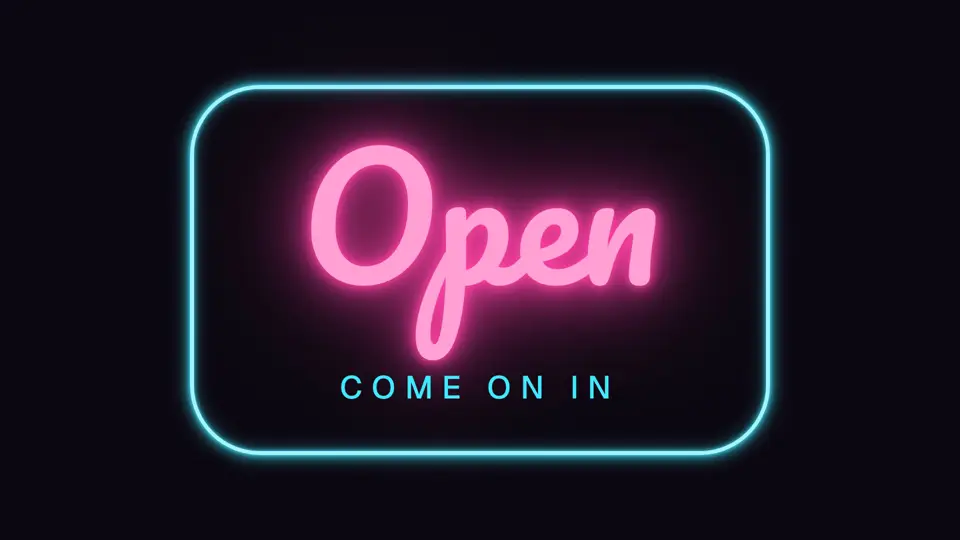
In 1910 Georges Claude showed glass tubes of glowing neon gas in Paris, and within a few years glass benders were turning them into words. By the 1920s neon had crossed the Atlantic, and for the next forty years it was the light of diners, motels, bars and cinemas.

Neon doesn’t just switch on. It stutters, catches, and settles into a hum.

In Dislab

Neon words and shapes with a pale-hot tube inside a glow of its own colour, that buzz on unevenly like a real tube and flicker now and then. Neon signs, neon menus and a neon split-flap board.

See neon signs

Cocktails · Open · Good vibes only · the candy bar

1910s

Under the clocks

Station clocks

Railway stations ran on time and showed it. Above the entrance to Melbourne’s Flinders Street Station hangs a row of clock faces, each showing when the next train leaves on its line, and “meet me under the clocks” became the city’s way of saying where.

A dial gives you the time before you’ve read a single word, which is why a row of them still feels like somewhere you’re about to leave from.

In Dislab

Station dials: a row of clocks, each pointing at the next class, session or tour, with its name on a plate underneath. And world clocks in classic and Roman faces.

See station dials

Today’s classes · next departures · world time · the time in

1920s

HOME 12.9

The ground board

At football and cricket grounds the score was kept by people inside the scoreboard, hanging painted numbers on hooks and taking them down again. Later came boards of bulbs, then electronic ones.

Ask anyone at a local club about their old scoreboard and they’ll tell you exactly where it stood.

In Dislab

Scoreboards that look like the real thing, from a heritage ground board with painted plates to a club clock tower and an 80s bulb board, scored live from a phone.

See scoreboards

The ground board · cricket · the clock tower · the 80s bulb board

1928

LATEST NEWS · FRESH BREAD FROM 7AM · OPEN TILL 9 ·

The news zipper

In 1928 the New York Times wrapped its building in Times Square with a ribbon of light bulbs, and the day’s headlines ran round it letter by letter. Crowds stood in the square to read the news as it moved.

It’s the grandfather of every scrolling sign since.

In Dislab

Pixel boards with a line that runs through, carrying the time, the weather, the next special or a live number.

See pixel and LED

The café board · the shop window · sale ends in · the office

1946

Rock ’n’ roll

Jukebox bubble tubes

After the war, Wurlitzer’s model 1015 lit up milk bars and diners with bubbling coloured tubes and an arch of glowing plastic. It became the shape everyone draws when they draw a jukebox.

You didn’t have to put a coin in to feel it. The bubbles rising through the light told you the place was open and there’d be music.

In Dislab

A lit-up jukebox beside your words: colour tubes with rising bubbles, chrome, a turning record, and your specials on the song cards.

See the jukebox

The diner · rock around the clock · happy hour · the record shop

1950s

DEPART

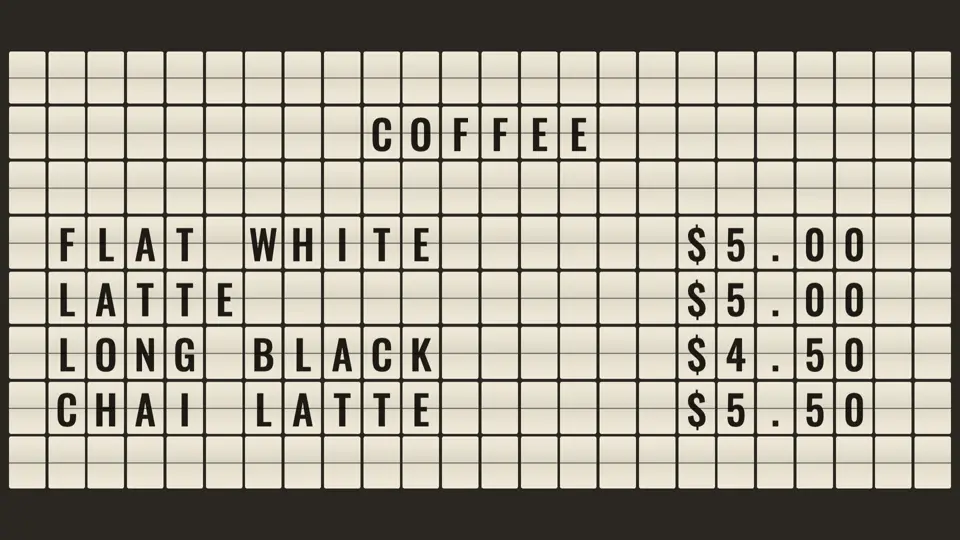
Split-flap

In the 1950s an Italian company, Solari of Udine, turned a clock into a board of flaps that flipped to any letter. It went up in railway stations and airports around the world, and the sound of a whole board changing at once became the sound of going somewhere.

Most of those boards have gone now. People still stop when they hear one.

In Dislab

A split-flap board drawn the way the real one moves. Each flap falls faster and faster, slaps down and bounces once, throws a shadow on the one below, and every tile is a shade apart, like a board that’s been on a station wall for thirty years. The click-clack is there if you want it.

See the split-flap board

Tour departures · baked today · on tap · guest information

1955

1955

Nixie tubes

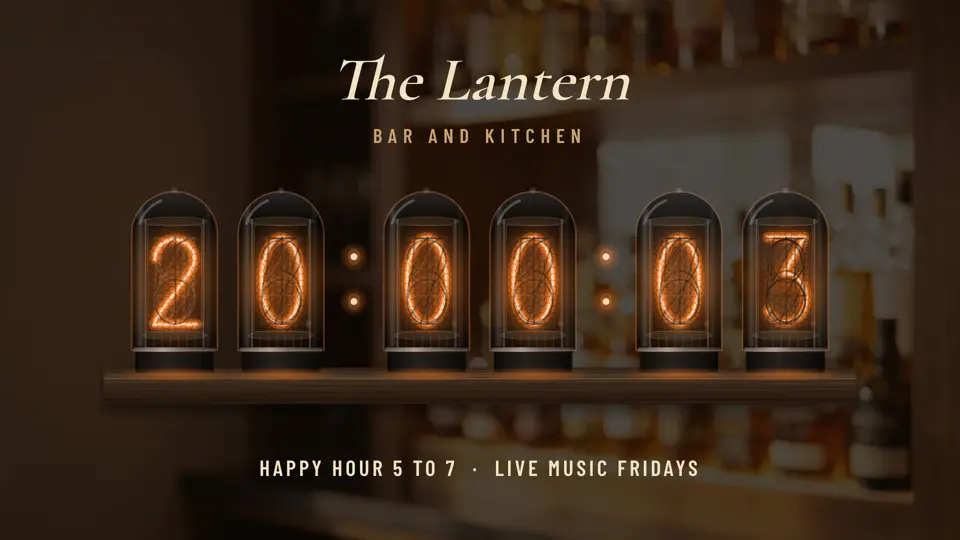
In 1955 Burroughs gave its glowing number tubes a name: Nixies. Ten wire digits sit stacked inside a glass tube of neon gas, and each one glows orange when its turn comes, with the others faint behind it.

They counted on lab instruments, lift panels and early computers. People still build clocks from old ones, because nothing else glows quite like them.

In Dislab

Orange digits floating inside glass tubes, the other numbers faintly behind, for clocks, countdowns and queue numbers. Each digit flickers to life as it changes.

See the nixie tube clock

Opening night · the bar clock · now serving · world time

1960s

NEXT BUS 4 MIN

Flip-dots and vanes

Flip-dot boards are made of small discs, one colour on one side and black on the other, turned over by a magnet. Vane displays do the same with the bars of each number. They showed up on scoreboards, the front of buses and the price poles of petrol stations, and when a message changes they ripple across with a soft rattle.

In Dislab

A flip-dot look for the pixel board, discs turning in a ripple, and vane numbers you can read across the road, where only the bars that change turn over.

See the vane display

Coffee prices on vanes · next class · today’s special · order ready

1967

TOTAL 11.40

VFD displays

Vacuum fluorescent displays arrived in the late 1960s and glowed blue-green on cash registers, petrol pumps, video recorders and car dashboards for the next thirty years.

If you’ve ever watched a till count up your total, you know the colour.

In Dislab

The cool glow of an old till: cyan segments behind smoked glass, the unlit ones ghosting behind, spelling your words as well as numbers, in four colours.

See the VFD display

Sale ends in · the till · reception · in amber

1974

P100 NEWS SPORT

Teletext

In 1974 the BBC started Ceefax: pages of news, sport and weather sent inside the TV signal, typed in eight colours on a grid of 40 by 25, with pictures made from little blocks. Australia had its own on Channel Seven.

You typed in a page number and waited for it to come round. It was the internet before the internet, and it looked like nothing else.

In Dislab

Teletext pages on your screen: blocky letters, eight bold colours, block pictures, and the page counter flicking through numbers before your page lands.

See teletext pages

The index · footy results · today’s specials · trivia night

1980s

INSERT COIN

LED dots and arcade screens

By the 1980s, rows of red and amber light-emitting diodes ran across shop windows, train platforms and taxi ranks, spelling out messages in chunky dot letters, while the arcade next door glowed with games drawn in big square pixels.

It’s the look of a late-night kebab shop, an arcade, a platform at 11 pm.

In Dislab

LED boards in amber, red, green or any colour, each dot with its own glow, with bitmap fonts, pixel art that moves, your own logo in dots, and arcade-screen signs.

See pixel and LED

Insert coffee to continue · game night · wood-fired · good morning

2000s

Now showing

The first flat screens

In the 2000s the flat screen arrived. Plasma and LCD screens went up in banks, airports, shop windows and food courts, playing slideshows that faded from one picture to the next, dressed in the glossy, glassy look of the computers of the day.

And the news kept a ticker running along the bottom of the screen, which never really left.

In Dislab

Photo slideshows, a scrolling ticker for any sign, and boards in a glass design for the weather, exchange rates and coin prices.

See clocks and weather

The weather · the ticker · metal prices · a slideshow

2020s

All of them, on one stick

Every one of them, behind any TV

Every one of these used to mean buying the real thing: a sign writer, a glass bender, a board shipped from Italy, a truck and an electrician. Today they all run on the same small stick behind a TV, and you can change your mind on a Tuesday afternoon.

LED · split-flap · a donut menu · nixie tubes, the best of every era on one stick

Not a knockoff

The details are the point.

We could have filtered a photo of a split-flap board and called it a day. But a picture of an old sign isn’t the old sign. What makes people look up is the movement: the weight of a flap, the stutter of a tube, the warmth of a filament. So that’s what we built.

The flapIt speeds up as it falls, slaps down and bounces once. Wide letters like W and M are narrowed the way a printer would, not squashed.
The tubeA hot, pale core inside a coloured glow. It buzzes on in an uneven rhythm: dark, a flash, a dim catch, then lit.
The bulbEvery bulb warms up as it lights and fades as it goes out, the way a filament does.
The dotEvery LED dot glows on its own, and flip-dots turn over in a ripple across the board, never all at once.
Not a costume. Not a filter. The real movement, made for a screen.

And it has to be smooth on an ordinary stick behind a TV, not just on a fast computer. We test every look on real Fire TV and Google TV sticks, frame by frame, and if it stutters we rebuild it until it doesn’t.

Event photo walls

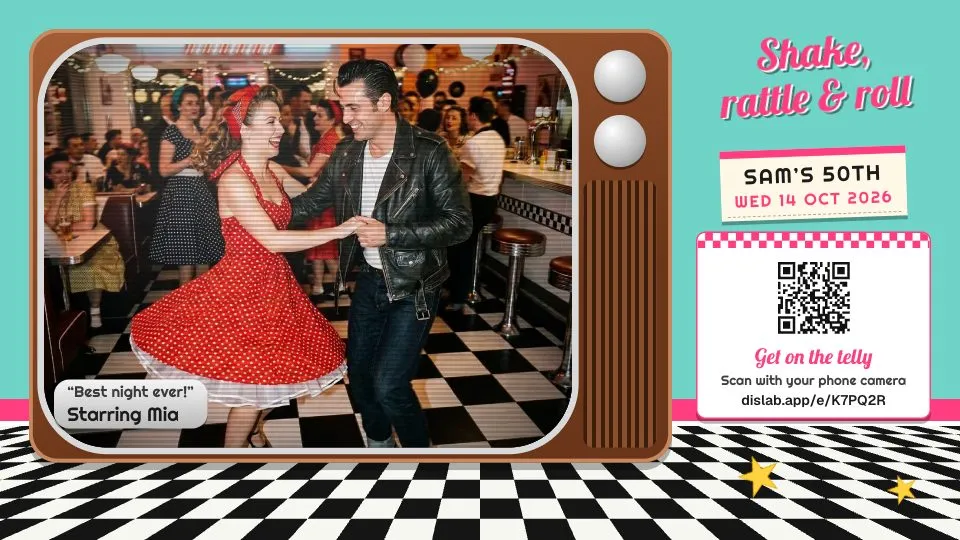
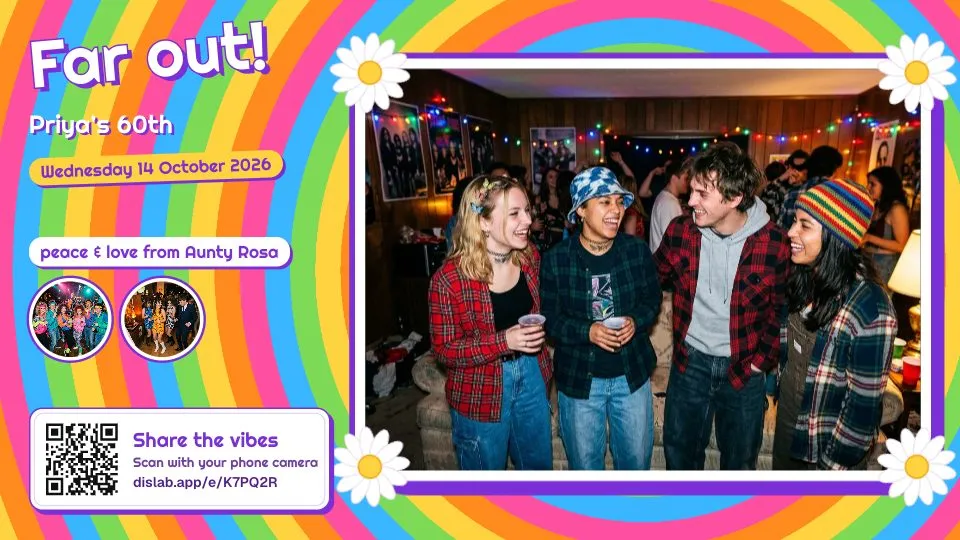
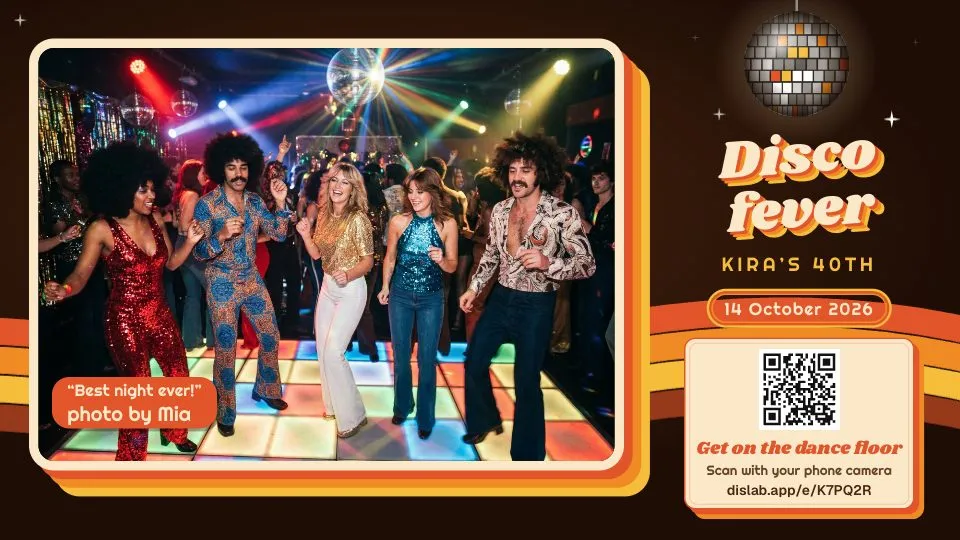
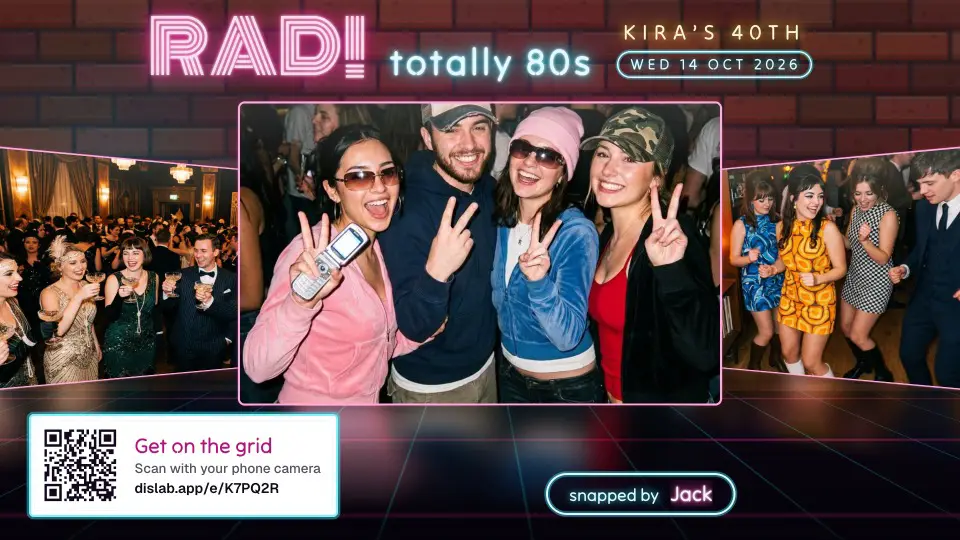
Every decade at the party.

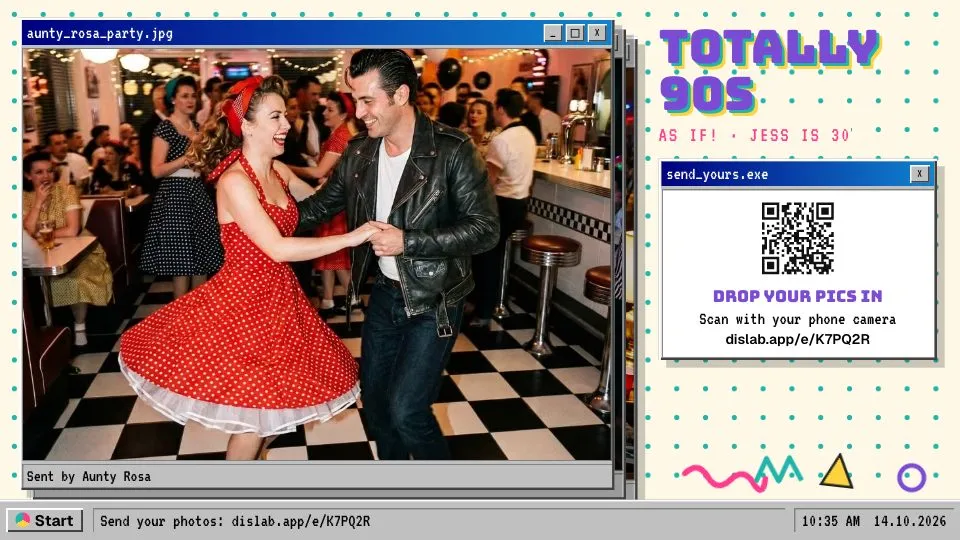
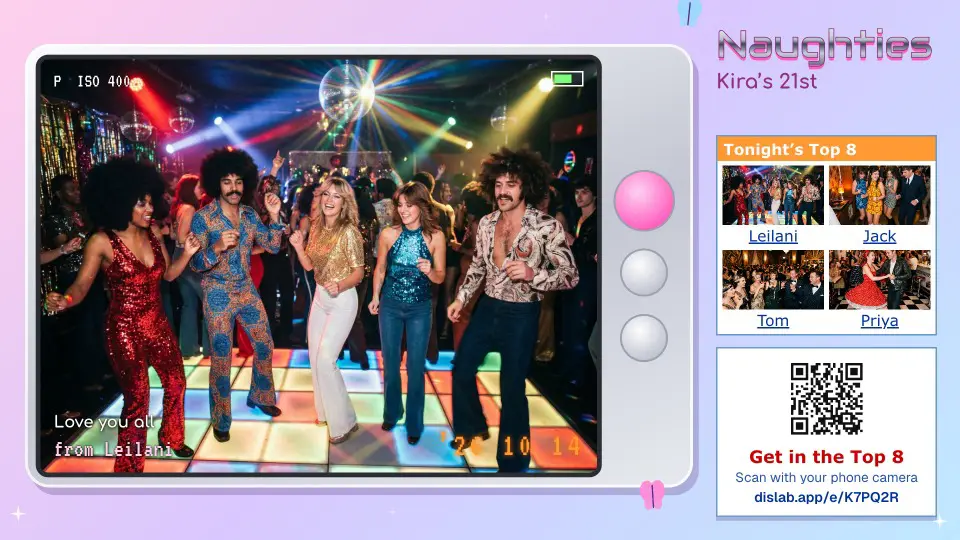
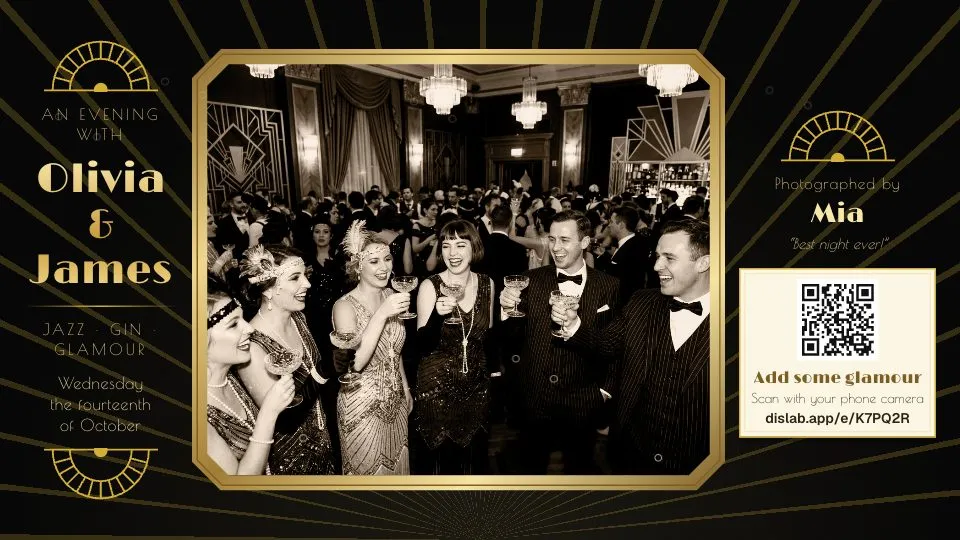
The past isn’t only for shop windows. Event photo walls show guests’ photos in the look of a decade: they scan a code, send a photo, and see it go up in style.

A photo wall in the look of the 1920s
The 1920s
A photo wall in the look of the 50s diner
The 50s diner
A photo wall in the look of the 60s
The 60s
A photo wall in the look of the 70s disco
The 70s disco
A photo wall in the look of totally 80s
Totally 80s
A photo wall in the look of the 90s
The 90s
A photo wall in the look of the 2000s
The 2000s

See every photo wall look

Why Dislab

The feeling, without the forklift.

Real vintage signs are wonderful, and they’re hard to own. A restored split-flap board costs thousands, weighs as much as a fridge, and needs a technician when a flap sticks. Neon needs a glass bender and a transformer. A bulb marquee needs an electrician and a ladder every time a bulb goes. And all of them say one thing until someone climbs up and changes it.

What you getA real vintage signA printed copyDislab
The real movementYesNoYes
Change the words any timeWith a ladderReprint itFrom your phone
Live times, weather, prices and scoresNoNoYes
Keeps going without the internetYesYesYes
Every look on one screenNoNoYes

Questions

Anything else? Ask us.

Are these signs videos?

No. Every sign on this page is drawn live in your browser by the same software your TV runs, from the same templates you start from in Dislab. What you see moving here is what moves on a screen.

Is it a real split-flap board?

It’s drawn on your TV, not built from flaps, but it moves the way a real one does: each flap falls, slaps down and bounces, throws a shadow, and only the letters that change flip. Most people walking past can’t tell until they look closely.

Do I need a special screen?

No. Any TV with an HDMI port and an Amazon Fire TV or Google TV stick, or a computer’s browser. Every look is made to run smoothly on an ordinary stick.

Can it make the sound?

Yes. The split-flap and flip-dot boards have their click-clack and rattle. It’s off unless you turn it on.

Will it keep working without the internet?

Yes. Everything a screen shows is saved on it, so the board keeps flipping and the neon keeps glowing if the internet drops. It catches up when the connection is back.

Which looks are included?

All of them come with Pro, at A$9.99 per screen a month, with a free 14-day trial of every Pro feature. One screen stays free for photos, videos, playlists and signs.

Bring a bit of the past to your screens.

Every look on this page comes with Pro: A$9.99 per screen a month, up to 20 screens, no setup fee and no contract, with a free 14-day trial of every Pro feature. One screen stays free for photos, videos, playlists and signs.